
RICH DAD POOR DAD
Introduction
Rich Dad Poor Dad is not just a finance book — it is a mindset shift. Robert Kiyosaki uses the contrasting beliefs of two father figures to challenge traditional ideas about money, work, and wealth-building. His “Poor Dad” represents the conventional, middle-class approach: go to school, get a secure job, work hard, save money, and retire with a pension. His “Rich Dad” represents a less conventional but financially intelligent approach: build assets, learn how money works, think independently, and never rely solely on a salary. Read More
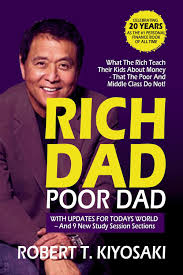
RICH DAD POOR DAD
Introduction
Rich Dad Poor Dad is not just a finance book — it is a mindset shift. Robert Kiyosaki uses the contrasting beliefs of two father figures to challenge traditional ideas about money, work, and wealth-building. His “Poor Dad” represents the conventional, middle-class approach: go to school, get a secure job, work hard, save money, and retire with a pension. His “Rich Dad” represents a less conventional but financially intelligent approach: build assets, learn how money works, think independently, and never rely solely on a salary.
This summary covers all chapters, core lessons, examples, and philosophies. It also explains why the book became a global classic and what readers must understand to use its ideas correctly.
THE TWO FATHERS: THE FOUNDATION OF THE BOOK
Kiyosaki was raised by two strong influence figures:
Poor Dad (His biological father)
- Highly educated (PhD).
- Believed in traditional schooling.
- Believed job security was everything.
- Believed talking about money was rude.
- Valued stability over risk.
- Worked for the government but always struggled financially.
- Represented the employee mindset.
Rich Dad (Father of his best friend, Mike)
- Did not finish high school.
- Entrepreneur, investor, and business owner.
- Believed financial education was essential.
- Saw money as a tool, not something to fear.
- Taught Robert through real-life experiences.
- Represented the investor/business-owner mindset.
The contrast between them forms the core lesson:
Being "rich" starts in the mind long before it appears in the bank.
CHAPTER 1 — THE RICH DON’T WORK FOR MONEY
As a young boy, Robert wanted to learn how to become rich. Rich Dad immediately gave him a surprising first lesson: Do not work for money; make money work for you.
Key Lessons:
- Employees trade time for money.
- The wealthy build assets that generate money without working.
- Fear and desire control the poor and middle class.
- Fear of being broke makes them work.
- Desire for comfort makes them spend.
- Money is learned through experience, not schools.
- Getting angry at your situation is healthy, but staying broke is a choice.
Robert begins working for Rich Dad for almost nothing. When he complains about being paid unfairly, Rich Dad teaches him that real opportunities appear only when you stop depending on money.
The painful but transformative insight:
“Most people become slaves to money because they rely on it instead of learning how to manage it.”
CHAPTER 2 — WHY TEACH FINANCIAL LITERACY?
Rich Dad introduces Robert to the most important idea in the entire book:
“The rich buy assets. The poor buy liabilities they think are assets.”
What are Assets?
Things that put money into your pocket:
- Rental properties
- Businesses
- Stocks
- Bonds
- Royalties
- Intellectual property
- Dividends
- Cash-flowing investments